
What Makes Japanese Knives Different? A Complete Beginner’s Guide
As an Amazon Associate, we earn from qualifying purchases. Our recommendations are independent and based on research, not sponsorships.
So what makes Japanese knives different from the Western blades most of us grew up with? If you’ve ever sliced a tomato with a truly sharp knife — the blade gliding through the skin without crushing it — you already have a hint. And if you’ve ever stared at a product page trying to decode “VG-10,” “Damascus,” “Gyuto,” and “60 HRC,” you also understand the confusion.
Most people come to Japanese knives excited to upgrade their cooking, then get lost in unfamiliar terminology, conflicting advice, and the fear of spending good money on the wrong blade. The good news: you don’t need a metallurgy degree to choose well. You need to understand three things.
This guide explains what actually sets Japanese knives apart from Western ones, walks you through the types and steels worth knowing, and helps you pick a first knife with confidence. We don’t sell knives, so we have no reason to push you toward any particular brand — only toward the right choice for you.
The Short Answer: Steel, Geometry, and Philosophy
What makes Japanese knives different from Western ones comes down to three fundamental things:
- Harder steel that takes a finer edge and holds it longer.
- Thinner blades ground to sharper angles, so they part food instead of wedging through it.
- A design philosophy built around precise slicing rather than heavy chopping.
Everything else — the beautiful Damascus patterns, the exotic steel names, the centuries of tradition — flows from those three ideas. Let’s unpack each one.
Harder Steel Means a Sharper Edge That Lasts
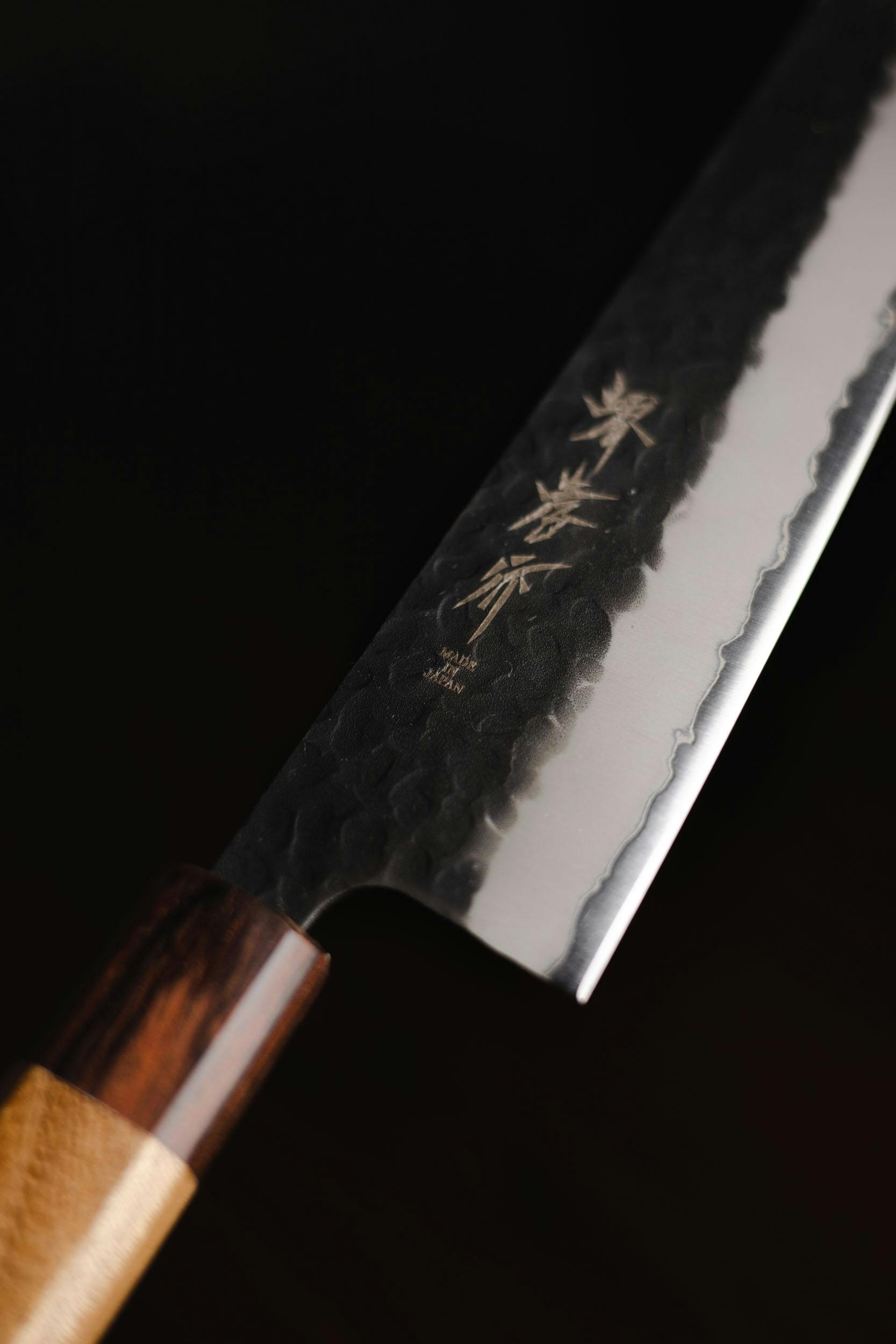
The single biggest difference is steel hardness, measured on the Rockwell C scale (you’ll see it written as “HRC”). It’s simply a number describing how hard the steel is.
Western knives typically land around 55–58 HRC. Japanese knives usually run 60–62 HRC, and some premium steels go higher. Harder steel can be ground to a thinner, sharper edge, and it holds that edge through far more cutting before needing attention.
There’s a trade-off, and it’s worth being honest about: harder steel is also more brittle. A Japanese blade rewards careful use, but it can chip if you twist it, hit a bone, or treat it like a hatchet. This isn’t a flaw — it’s the consequence of optimizing for sharpness instead of brute durability. Use the knife as intended and this rarely becomes a problem.
Stainless vs. Carbon Steel: Which Should a Beginner Pick?
This is the choice that trips up most first-time buyers, so here’s the simple version.
Stainless steel is the right starting point for almost everyone. It resists rust and stains, so it forgives you if you don’t dry it the instant you finish. The two names worth knowing:
- VG-10 — the industry workhorse. It reaches around 59–62 HRC, takes a very sharp edge, sharpens easily, and resists corrosion well thanks to its high chromium content. You’ll find it in knives from Tojiro, Shun, and many others. It’s a genuinely excellent all-rounder for beginners and intermediates alike.
- Ginsan (also called Silver #3) — a stainless steel that sharpens almost like a carbon steel and takes a beautifully fine edge. Sakai sharpeners sometimes call it “the stainless steel with a soul.” Slightly less common, but excellent.
Carbon steel (such as White #2 or Blue #2) takes an even keener edge and has a devoted following — but it rusts, stains, and demands real discipline: keep it clean, dry it immediately, and be careful with acidic foods. It’s a wonderful second knife once you’ve caught the bug. It is not a first knife. Start stainless; explore carbon later if you fall in love with the craft.
A note on “premium” steel: You’ll see powdered steels like SG2 (also sold as R2) marketed heavily. They’re hardened to roughly 61–64 HRC and hold an edge longer than VG-10 — but they cost more and are harder to sharpen. There’s no need to chase them for your first knife. VG-10 or Ginsan will serve you beautifully.
A great example of a beginner-friendly VG-10 knife is the Tojiro DP Gyuto, which has earned a near-cult reputation as the gateway into Japanese knives for good reason — excellent steel, honest construction, and a modest price. It comes in several lengths; a shorter 180mm version is forgiving and easy to control if you’re nervous about handling a bigger blade.
Thinner Blades and Sharper Angles
If hardness is the first difference, edge geometry is the second — and it’s the one you feel immediately.
Western knife edges are typically ground to around 20 degrees per side. Japanese double-bevel knives are commonly sharpened to 10–15 degrees per side, bringing the total edge angle to roughly 20–30 degrees versus the 40–45 degrees common on European knives. A thinner, more acute edge means less resistance, so the blade slips through an onion or a carrot instead of splitting it apart by force.
This is also why that hard steel matters: a thin edge at a low angle would roll or fold on softer Western steel. The hardness is what lets the edge stay that thin and that sharp.
There’s one piece of terminology worth learning here:
- Double bevel — sharpened on both sides, like Western knives. This is what you want as a beginner. It works for left- and right-handed cooks and handles every everyday task.
- Single bevel — sharpened on only one side. These are traditional specialist knives (the yanagiba for slicing fish, the usuba for vegetables) used in sushi and washoku kitchens. They produce stunning cuts in skilled hands but are demanding to use and sharpen. Admire them; don’t start with them.
A Different Design Philosophy: Slicing, Not Rocking
The third difference is the one people overlook. Western chef’s knives have a curved “belly” designed for rock chopping — you plant the tip and rock the handle up and down. Japanese knives generally have a flatter profile built for push and pull cutting, plus a straightforward up-and-down chop.
This is why technique matters. A Japanese knife rewards controlled, deliberate slicing and dislikes being used as a cleaver. Once you adjust your motion, the payoff is cleaner cuts with noticeably less effort.
This philosophy has deep roots. Many Japanese knifemaking regions — Sakai, Seki, Echizen, Tsubame-Sanjō — trace their craft back to sword-smithing traditions, and that heritage shows up in how blades are forged, clad, and finished. It’s a lovely story, but don’t let romance drive your purchase. A knife earns its place at your cutting board through performance, not legend.
The Main Knife Types a Beginner Should Know
Japanese cutlery has dozens of specialized shapes, but you only need to recognize a handful to start.
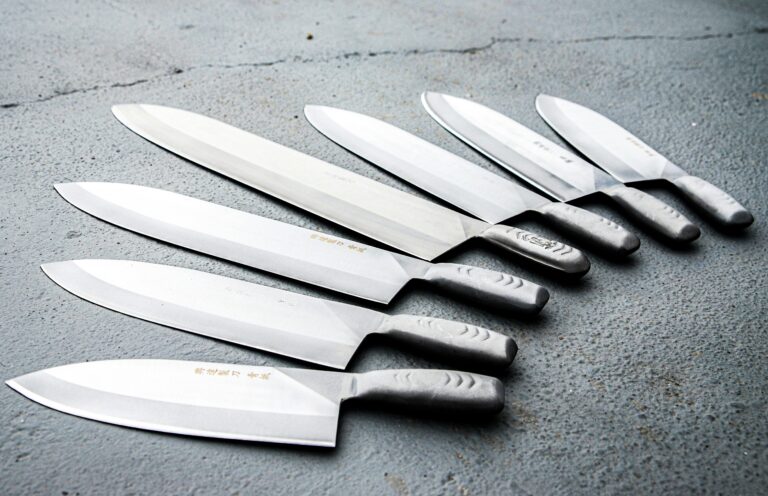
- Gyuto — Japan’s take on the Western chef’s knife and the most versatile option. Blades commonly run from about 180mm up to 270mm (roughly 7–10.5 inches), with a pointed tip and a gentle belly curve that allows both slicing and a little rocking. A 210mm is the classic all-rounder, but a 180mm is a great, manageable starting length for home kitchens. If you buy one knife, make it a gyuto.
- Santoku — shorter (usually 165–180mm) with a flat profile and a rounded “sheep’s foot” tip. The name means “three virtues” — a nod to its skill with meat, fish, and vegetables. Lighter and easy to control, it’s a favorite for home cooks and anyone with smaller hands. It excels at push-cutting and scooping food off the board.
- Bunka — essentially a santoku with a pointed, sword-like “reverse tanto” (K-tip) and an often flatter edge. The tip adds precision for detailed work. Great if you want santoku handling with a nimbler point.
- Petty — a small utility knife (roughly 120–150mm) for tasks that feel clumsy with a full-size blade: trimming, peeling, small produce. A perfect second knife.
The specialist single-bevel knives — yanagiba, usuba, deba — are worth knowing by name, but they’re tools for specific jobs, not first purchases.
The takeaway: You do not need a knife set. Most home cooks reach for the same blade 90% of the time. A single gyuto or santoku handles vegetables, meat, fish, and herbs — the overwhelming majority of everyday cutting. One good knife beats three mediocre ones.
If you’re torn between the two most popular choices, the MAC Professional MTH-80 is an 8-inch gyuto that professional cooks quietly recommend to each other, while a Tojiro DP Santoku is a fine pick for those who prefer a shorter, push-cutting blade. (That Tojiro santoku has a decorative Damascus pattern, but remember: the pattern is cosmetic — the VG-10 core is what actually cuts.)
Want help deciding between the two most popular shapes? Our guide to gyuto vs santoku breaks down which one fits your cooking style.
How to Choose YOUR First Japanese Knife
Here’s a simple framework that removes the guesswork.
Step 1 — Pick the type. If you’re unsure, choose a gyuto. It’s the most versatile across ingredients and techniques. Prefer something shorter and lighter, or do mostly vegetables? Go santoku.
Step 2 — Pick the steel. For your first knife, choose stainless — VG-10 or Ginsan. You can explore carbon once you know you enjoy the maintenance.
Step 3 — Pick the handle. Japanese (“wa”) handles are lighter and often octagonal; Western (“yo”) handles are heavier and more contoured. This is mostly personal preference — hold both if you can.
Step 4 — Set a realistic budget. A genuinely good first knife sits in the $80–$200 range. Below that, quality drops off fast; well above it is over-investment for a beginner. Spend within that band and buy one knife you’ll enjoy using.
Red flags to avoid: Be wary of blades marketed as “Japanese-style” but stamped overseas by brands that don’t actually make anything in Japan. If the product listing won’t tell you the steel type, treat that as a warning sign and move on.
Caring for Your Japanese Knife (The 60-Second Version)
A Japanese knife isn’t high-maintenance, but it does ask for a little respect:
- Hand wash and dry immediately. Never the dishwasher — the heat, detergent, and jostling ruin both edge and handle.
- Use a wood or soft composite cutting board. Never glass, stone, or marble; they destroy the thin edge.
- No twisting, no bones, no frozen food. Reach for a cleaver or a tougher knife for those jobs.
- Sharpen on whetstones, not pull-through sharpeners. Those pull-through gadgets grind away the careful Japanese edge geometry. A simple combination whetstone — something like the King 1000/6000 grit stone — is all most beginners need to keep an edge keen.
- New to sharpening? Our step-by-step guide to sharpening a Japanese knife walks you through it, and our full Japanese knife care guide covers everything else about keeping your blade in top shape.
Sharpening is part of the craft, not a chore to dread. A small investment of time and a single stone will keep your knife performing for years.
Are Japanese Knives Worth It for a Beginner?
Yes — provided you’re willing to do the small bit of care they ask for. In return you get cleaner cuts, less effort at the board, more enjoyment while cooking, and a tool that can last for decades. They cost more upfront than a typical supermarket knife, but a single well-maintained blade often replaces a drawer full of dull ones.
Our honest advice: don’t overspend on a set you’ll never fully use. Buy one excellent knife, learn to care for it, and build from there as your skills and curiosity grow.
Conclusion
Three things make Japanese knives different: harder steel that takes and holds a finer edge, thinner blades at sharper angles that part food cleanly, and a slicing-first design philosophy. Understand those, and the rest of the terminology falls into place.
For your first knife, keep it simple — a gyuto of around 180–210mm or a 165–170mm santoku in stainless VG-10, used on a wood board, hand-washed, dried, and kept sharp. That single, well-chosen blade will teach you more about good cooking than any drawer of dull steel ever could.
Ready to choose? See our roundup of the best Japanese knives for beginners for specific, budget-friendly recommendations.
Frequently Asked Questions
Are Japanese knives better than German or Western knives?
They’re different, not strictly better. Japanese knives prioritize sharpness and precision; Western knives prioritize toughness and all-purpose durability. The best choice depends on your cooking style and how much care you’re willing to give the blade.
What is the best Japanese knife for a beginner?
A gyuto (around 180–210mm) or a 165–170mm santoku in a forgiving stainless steel like VG-10. Both handle the vast majority of kitchen tasks and are easy to maintain.
Do Japanese knives rust?
Carbon-steel knives can rust if not dried promptly. Stainless steels like VG-10 and Ginsan resist rust well — which is exactly why we recommend stainless for your first knife.
Why are Japanese knives so sharp?
A combination of harder steel (typically 60–62 HRC) and a thinner edge ground to a more acute angle (often 10–15 degrees per side). Together these let the blade take and hold a finer edge than most Western knives.
Can I put a Japanese knife in the dishwasher?
No. The heat, harsh detergent, and movement damage the edge and handle. Always hand wash and dry immediately.
4 Comments