Japanese Knife Care 101: How to Make Your Blade Last a Lifetime
As an Amazon Associate, we earn from qualifying purchases. Our recommendations are independent and based on research, not sponsorships.
A good Japanese knife is built to last decades — but only if you treat it right. The same qualities that make these blades extraordinary (hard steel, a thin, acute edge) also make them less forgiving of careless habits than a cheap supermarket knife. The good news: proper care isn’t complicated or time-consuming. It’s a handful of simple habits that take under a minute and quickly become second nature.
This guide covers everything a beginner needs: how to wash and dry your knife, which cutting board to use, how to store it, how to prevent (and handle) rust, and the common mistakes that quietly ruin good blades. Master these, and your knife will reward you with years of effortless, razor-sharp cutting.
(Just getting started? Our guide to what makes Japanese knives different explains why the steel and geometry call for this kind of care.)
The 60-Second Daily Routine
Let’s start with the single most important habit, because it prevents the most damage:
Hand wash and dry immediately after use. Every time.
- Rinse the blade with warm water and a little mild dish soap, using a soft sponge. Wipe from spine to edge — never run your fingers along the cutting edge.
- Rinse off the suds.
- Dry the blade completely with a soft towel right away. Don’t let it air-dry, and never leave it sitting wet in the sink.
That’s the whole routine, and it takes less than a minute. Moisture is your knife’s worst enemy — drying it thoroughly is the highest-leverage habit you can build. Pay extra attention after cutting acidic or salty foods (tomatoes, citrus, onions, garlic), which react with steel and can cause discoloration if left on the blade.
Never Use the Dishwasher
This deserves its own section because it’s the most common knife-killer. A dishwasher subjects your knife to the trifecta of destruction: prolonged moisture, high heat, and tumbling against other utensils. It dulls the edge, can chip the thin blade, loosens and cracks wooden handles, and promotes corrosion.
No matter how convenient it seems — never put a Japanese knife in the dishwasher. There are no exceptions to this rule.
Choose the Right Cutting Board
Your cutting board has a bigger effect on your edge than most people realize. The rule is simple: soft surfaces good, hard surfaces bad.
- Best: soft solid wood like hinoki (Japanese cypress) or maple, or end-grain wooden boards. These cushion the edge.
- Acceptable: quality plastic (HDPE) boards — gentle on the edge, though they wear faster.
- Avoid: glass, stone, marble, ceramic, and even bamboo. These are harder than they look and will dull or chip your edge quickly.
One more habit: when you clear chopped food off the board, don’t scrape with the cutting edge — turn the knife over and use the spine, or a bench scraper. Scraping with the edge rolls and dulls it.
Store It Safely
Tossing a knife loose in a drawer is asking for two problems: a damaged edge (from banging against other utensils) and accidental cuts when you reach in. Better options:
- A magnetic strip in a dry part of the kitchen — keeps the blade visible, protected, and away from moisture.
- A dedicated knife block that’s kept dry.
- A saya (a fitted wooden sheath) — traditional and excellent, but with one critical rule: never sheathe a freshly washed knife. A wet saya traps moisture against the blade for hours. Let both dry fully first.
Wherever you store it, keep it away from the sink and dishwasher — those humid microclimates can start surface rust even on a clean blade overnight.
Preventing and Handling Rust
Here’s a point that surprises beginners: even stainless steel can rust. Stainless (like the VG-10 in most beginner knives) resists corrosion far better than carbon steel, but it’s resistant, not immune. Neglect — leaving it wet, or letting acidic food sit on it — can still cause spots.
Prevention is the whole game, and you already know it: wash, dry thoroughly, store dry. That’s 95% of rust prevention right there.
For carbon steel knives, add one step: wipe a thin film of food-grade mineral oil or traditional camellia oil (tsubaki) along the blade before storing. Two or three drops on a paper towel is plenty — the film should be invisible. (Skip olive or vegetable oil; they turn rancid.) Stainless knives generally don’t need oiling, though a wipe before long storage doesn’t hurt.
Patina vs. rust — worth knowing: on carbon steel, a grayish-blue patina may develop over time. That’s normal, even protective, and prized by enthusiasts. Reddish-brown discoloration, however, is true rust and should be removed promptly with a rust eraser or a gentle baking-soda paste, then re-oiled.
Sharpening Is Part of Care
A dull knife isn’t just frustrating — it’s more dangerous (it slips and needs more force) and it actually accelerates wear. Keeping your knife sharp is maintenance, not a separate chore.
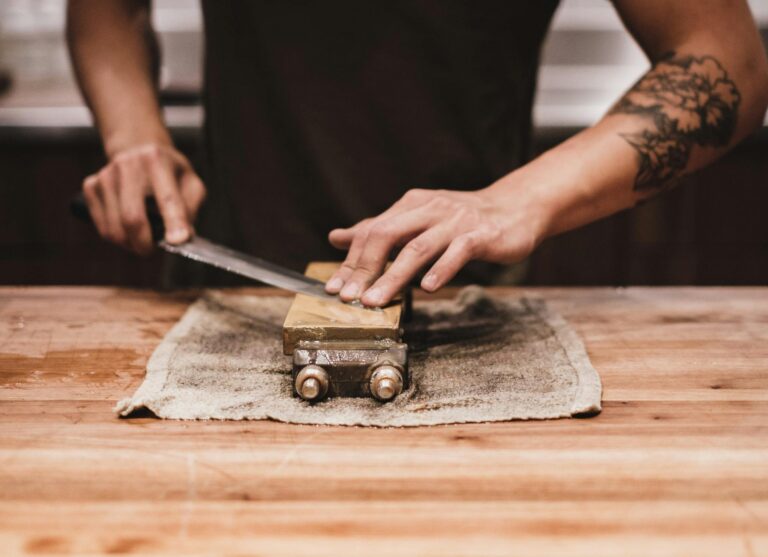
Japanese knives should be sharpened on a whetstone, never a pull-through or electric sharpener (those chip the thin, hard edge). For home use, every two to four months is plenty. If you’ve never done it, our step-by-step guide to sharpening a Japanese knife walks you through it — it’s easier than it looks.
Common Mistakes to Avoid
A quick checklist of habits that quietly destroy good knives:
- The dishwasher. (Yes, again — it’s that important.)
- Letting the blade air-dry or sit wet. Always towel-dry immediately.
- Cutting bones, frozen food, or hard items. The thin edge chips. Use a heavier tool for those.
- Twisting or prying with the blade. It’s a slicer, not a lever.
- Hard cutting boards. Glass and stone are edge-killers.
- Scraping food with the edge. Use the spine.
- Storing loose in a drawer. Damages the edge and risks your fingers.
- Skipping oil on carbon steel. Non-negotiable for full-carbon blades.
Conclusion
Caring for a Japanese knife comes down to a few simple habits: hand wash and dry it right after use, keep it off hard cutting boards and out of the dishwasher, store it somewhere dry and protected, and keep it sharp with a whetstone. Carbon steel asks for one extra step — a wipe of oil before storage.
None of this takes more than a minute a day, and the payoff is a blade that stays beautiful and razor-sharp for decades. Treat your knife well and it becomes the kind of tool you’ll hand down, not throw away.
For more, see our guides on what makes Japanese knives different, choosing between a gyuto and santoku, and the best Japanese knives for beginners.
Frequently Asked Questions
Can I put a Japanese knife in the dishwasher? Never. The heat, moisture, and contact with other utensils dull the edge, can chip the blade, damage the handle, and cause rust. Always hand wash and dry immediately.
Do stainless steel Japanese knives rust? They resist rust far better than carbon steel, but they’re not immune. Leaving them wet or letting acidic foods sit on the blade can cause spots. Wash, dry thoroughly, and store dry to prevent it.
What cutting board is best for Japanese knives? Soft solid wood (like hinoki or maple) or end-grain wooden boards are ideal. Quality plastic is acceptable. Avoid glass, stone, marble, ceramic, and bamboo — they’re hard enough to dull or chip the edge.
How should I store my Japanese knife? On a magnetic strip, in a dry knife block, or in a saya (sheath) — anywhere dry and protected. Never loose in a drawer where it bangs against other utensils, and never near the sink or dishwasher.
What oil should I use on a Japanese knife? Food-grade mineral oil or traditional camellia (tsubaki) oil. Both are food-safe and won’t go rancid. Avoid olive or vegetable oil. Oiling is essential for carbon steel and optional for stainless.
How do I remove rust from my knife? Light surface rust (reddish-brown) can be removed with a rust eraser or a gentle baking-soda paste, then re-oil the blade. A grayish-blue patina on carbon steel, however, is normal and doesn’t need removing.
Japanese Knife Care 101: How to Make Your Blade Last a Lifetime
As an Amazon Associate, we earn from qualifying purchases. Our recommendations are independent and based on research, not sponsorships.
A good Japanese knife is built to last decades — but only if you treat it right. The same qualities that make these blades extraordinary (hard steel, a thin, acute edge) also make them less forgiving of careless habits than a cheap supermarket knife. The good news: proper care isn’t complicated or time-consuming. It’s a handful of simple habits that take under a minute and quickly become second nature.
This guide covers everything a beginner needs: how to wash and dry your knife, which cutting board to use, how to store it, how to prevent (and handle) rust, and the common mistakes that quietly ruin good blades. Master these, and your knife will reward you with years of effortless, razor-sharp cutting.
(Just getting started? Our guide to what makes Japanese knives different explains why the steel and geometry call for this kind of care.)
The 60-Second Daily Routine
Let’s start with the single most important habit, because it prevents the most damage:
Hand wash and dry immediately after use. Every time.
- Rinse the blade with warm water and a little mild dish soap, using a soft sponge. Wipe from spine to edge — never run your fingers along the cutting edge.
- Rinse off the suds.
- Dry the blade completely with a soft towel right away. Don’t let it air-dry, and never leave it sitting wet in the sink.
That’s the whole routine, and it takes less than a minute. Moisture is your knife’s worst enemy — drying it thoroughly is the highest-leverage habit you can build. Pay extra attention after cutting acidic or salty foods (tomatoes, citrus, onions, garlic), which react with steel and can cause discoloration if left on the blade.
Never Use the Dishwasher
This deserves its own section because it’s the most common knife-killer. A dishwasher subjects your knife to the trifecta of destruction: prolonged moisture, high heat, and tumbling against other utensils. It dulls the edge, can chip the thin blade, loosens and cracks wooden handles, and promotes corrosion.
No matter how convenient it seems — never put a Japanese knife in the dishwasher. There are no exceptions to this rule.
Choose the Right Cutting Board
Your cutting board has a bigger effect on your edge than most people realize. The rule is simple: soft surfaces good, hard surfaces bad.
- Best: soft solid wood like hinoki (Japanese cypress) or maple, or end-grain wooden boards. These cushion the edge.
- Acceptable: quality plastic (HDPE) boards — gentle on the edge, though they wear faster.
- Avoid: glass, stone, marble, ceramic, and even bamboo. These are harder than they look and will dull or chip your edge quickly.
One more habit: when you clear chopped food off the board, don’t scrape with the cutting edge — turn the knife over and use the spine, or a bench scraper. Scraping with the edge rolls and dulls it.
Store It Safely
Tossing a knife loose in a drawer is asking for two problems: a damaged edge (from banging against other utensils) and accidental cuts when you reach in. Better options:
- A magnetic strip in a dry part of the kitchen — keeps the blade visible, protected, and away from moisture.
- A dedicated knife block that’s kept dry.
- A saya (a fitted wooden sheath) — traditional and excellent, but with one critical rule: never sheathe a freshly washed knife. A wet saya traps moisture against the blade for hours. Let both dry fully first.
Wherever you store it, keep it away from the sink and dishwasher — those humid microclimates can start surface rust even on a clean blade overnight.
Preventing and Handling Rust
Here’s a point that surprises beginners: even stainless steel can rust. Stainless (like the VG-10 in most beginner knives) resists corrosion far better than carbon steel, but it’s resistant, not immune. Neglect — leaving it wet, or letting acidic food sit on it — can still cause spots.
Prevention is the whole game, and you already know it: wash, dry thoroughly, store dry. That’s 95% of rust prevention right there.
For carbon steel knives, add one step: wipe a thin film of food-grade mineral oil or traditional camellia oil (tsubaki) along the blade before storing. Two or three drops on a paper towel is plenty — the film should be invisible. (Skip olive or vegetable oil; they turn rancid.) Stainless knives generally don’t need oiling, though a wipe before long storage doesn’t hurt.
Patina vs. rust — worth knowing: on carbon steel, a grayish-blue patina may develop over time. That’s normal, even protective, and prized by enthusiasts. Reddish-brown discoloration, however, is true rust and should be removed promptly with a rust eraser or a gentle baking-soda paste, then re-oiled.
Sharpening Is Part of Care
A dull knife isn’t just frustrating — it’s more dangerous (it slips and needs more force) and it actually accelerates wear. Keeping your knife sharp is maintenance, not a separate chore.
Japanese knives should be sharpened on a whetstone, never a pull-through or electric sharpener (those chip the thin, hard edge). For home use, every two to four months is plenty. If you’ve never done it, our step-by-step guide to sharpening a Japanese knife walks you through it — it’s easier than it looks.
Common Mistakes to Avoid
A quick checklist of habits that quietly destroy good knives:
- The dishwasher. (Yes, again — it’s that important.)
- Letting the blade air-dry or sit wet. Always towel-dry immediately.
- Cutting bones, frozen food, or hard items. The thin edge chips. Use a heavier tool for those.
- Twisting or prying with the blade. It’s a slicer, not a lever.
- Hard cutting boards. Glass and stone are edge-killers.
- Scraping food with the edge. Use the spine.
- Storing loose in a drawer. Damages the edge and risks your fingers.
- Skipping oil on carbon steel. Non-negotiable for full-carbon blades.
Conclusion
Caring for a Japanese knife comes down to a few simple habits: hand wash and dry it right after use, keep it off hard cutting boards and out of the dishwasher, store it somewhere dry and protected, and keep it sharp with a whetstone. Carbon steel asks for one extra step — a wipe of oil before storage.
None of this takes more than a minute a day, and the payoff is a blade that stays beautiful and razor-sharp for decades. Treat your knife well and it becomes the kind of tool you’ll hand down, not throw away.
For more, see our guides on what makes Japanese knives different, choosing between a gyuto and santoku, and the best Japanese knives for beginners.
Frequently Asked Questions
Can I put a Japanese knife in the dishwasher? Never. The heat, moisture, and contact with other utensils dull the edge, can chip the blade, damage the handle, and cause rust. Always hand wash and dry immediately.
Do stainless steel Japanese knives rust? They resist rust far better than carbon steel, but they’re not immune. Leaving them wet or letting acidic foods sit on the blade can cause spots. Wash, dry thoroughly, and store dry to prevent it.
What cutting board is best for Japanese knives? Soft solid wood (like hinoki or maple) or end-grain wooden boards are ideal. Quality plastic is acceptable. Avoid glass, stone, marble, ceramic, and bamboo — they’re hard enough to dull or chip the edge.
How should I store my Japanese knife? On a magnetic strip, in a dry knife block, or in a saya (sheath) — anywhere dry and protected. Never loose in a drawer where it bangs against other utensils, and never near the sink or dishwasher.
What oil should I use on a Japanese knife? Food-grade mineral oil or traditional camellia (tsubaki) oil. Both are food-safe and won’t go rancid. Avoid olive or vegetable oil. Oiling is essential for carbon steel and optional for stainless.
How do I remove rust from my knife? Light surface rust (reddish-brown) can be removed with a rust eraser or a gentle baking-soda paste, then re-oil the blade. A grayish-blue patina on carbon steel, however, is normal and doesn’t need removing.
As an Amazon Associate, we earn from qualifying purchases. Our recommendations are independent and based on research, not sponsorships.
A good Japanese knife is built to last decades — but only if you treat it right. The same qualities that make these blades extraordinary (hard steel, a thin, acute edge) also make them less forgiving of careless habits than a cheap supermarket knife. The good news: proper care isn’t complicated or time-consuming. It’s a handful of simple habits that take under a minute and quickly become second nature.
This guide covers everything a beginner needs: how to wash and dry your knife, which cutting board to use, how to store it, how to prevent (and handle) rust, and the common mistakes that quietly ruin good blades. Master these, and your knife will reward you with years of effortless, razor-sharp cutting.
(Just getting started? Our guide to what makes Japanese knives different explains why the steel and geometry call for this kind of care.)
The 60-Second Daily Routine
Let’s start with the single most important habit, because it prevents the most damage:
Hand wash and dry immediately after use. Every time.
- Rinse the blade with warm water and a little mild dish soap, using a soft sponge. Wipe from spine to edge — never run your fingers along the cutting edge.
- Rinse off the suds.
- Dry the blade completely with a soft towel right away. Don’t let it air-dry, and never leave it sitting wet in the sink.
That’s the whole routine, and it takes less than a minute. Moisture is your knife’s worst enemy — drying it thoroughly is the highest-leverage habit you can build. Pay extra attention after cutting acidic or salty foods (tomatoes, citrus, onions, garlic), which react with steel and can cause discoloration if left on the blade.
Never Use the Dishwasher
This deserves its own section because it’s the most common knife-killer. A dishwasher subjects your knife to the trifecta of destruction: prolonged moisture, high heat, and tumbling against other utensils. It dulls the edge, can chip the thin blade, loosens and cracks wooden handles, and promotes corrosion.
No matter how convenient it seems — never put a Japanese knife in the dishwasher. There are no exceptions to this rule.
Choose the Right Cutting Board
Your cutting board has a bigger effect on your edge than most people realize. The rule is simple: soft surfaces good, hard surfaces bad.
- Best: soft solid wood like hinoki (Japanese cypress) or maple, or end-grain wooden boards. These cushion the edge.
- Acceptable: quality plastic (HDPE) boards — gentle on the edge, though they wear faster.
- Avoid: glass, stone, marble, ceramic, and even bamboo. These are harder than they look and will dull or chip your edge quickly.
One more habit: when you clear chopped food off the board, don’t scrape with the cutting edge — turn the knife over and use the spine, or a bench scraper. Scraping with the edge rolls and dulls it.
Store It Safely
Tossing a knife loose in a drawer is asking for two problems: a damaged edge (from banging against other utensils) and accidental cuts when you reach in. Better options:
- A magnetic strip in a dry part of the kitchen — keeps the blade visible, protected, and away from moisture.
- A dedicated knife block that’s kept dry.
- A saya (a fitted wooden sheath) — traditional and excellent, but with one critical rule: never sheathe a freshly washed knife. A wet saya traps moisture against the blade for hours. Let both dry fully first.
Wherever you store it, keep it away from the sink and dishwasher — those humid microclimates can start surface rust even on a clean blade overnight.
Preventing and Handling Rust
Here’s a point that surprises beginners: even stainless steel can rust. Stainless (like the VG-10 in most beginner knives) resists corrosion far better than carbon steel, but it’s resistant, not immune. Neglect — leaving it wet, or letting acidic food sit on it — can still cause spots.
Prevention is the whole game, and you already know it: wash, dry thoroughly, store dry. That’s 95% of rust prevention right there.
For carbon steel knives, add one step: wipe a thin film of food-grade mineral oil or traditional camellia oil (tsubaki) along the blade before storing. Two or three drops on a paper towel is plenty — the film should be invisible. (Skip olive or vegetable oil; they turn rancid.) Stainless knives generally don’t need oiling, though a wipe before long storage doesn’t hurt.
Patina vs. rust — worth knowing: on carbon steel, a grayish-blue patina may develop over time. That’s normal, even protective, and prized by enthusiasts. Reddish-brown discoloration, however, is true rust and should be removed promptly with a rust eraser or a gentle baking-soda paste, then re-oiled.
Sharpening Is Part of Care
A dull knife isn’t just frustrating — it’s more dangerous (it slips and needs more force) and it actually accelerates wear. Keeping your knife sharp is maintenance, not a separate chore.
Japanese knives should be sharpened on a whetstone, never a pull-through or electric sharpener (those chip the thin, hard edge). For home use, every two to four months is plenty. If you’ve never done it, our step-by-step guide to sharpening a Japanese knife walks you through it — it’s easier than it looks.
Common Mistakes to Avoid
A quick checklist of habits that quietly destroy good knives:
- The dishwasher. (Yes, again — it’s that important.)
- Letting the blade air-dry or sit wet. Always towel-dry immediately.
- Cutting bones, frozen food, or hard items. The thin edge chips. Use a heavier tool for those.
- Twisting or prying with the blade. It’s a slicer, not a lever.
- Hard cutting boards. Glass and stone are edge-killers.
- Scraping food with the edge. Use the spine.
- Storing loose in a drawer. Damages the edge and risks your fingers.
- Skipping oil on carbon steel. Non-negotiable for full-carbon blades.
Conclusion
Caring for a Japanese knife comes down to a few simple habits: hand wash and dry it right after use, keep it off hard cutting boards and out of the dishwasher, store it somewhere dry and protected, and keep it sharp with a whetstone. Carbon steel asks for one extra step — a wipe of oil before storage.
None of this takes more than a minute a day, and the payoff is a blade that stays beautiful and razor-sharp for decades. Treat your knife well and it becomes the kind of tool you’ll hand down, not throw away.
For more, see our guides on what makes Japanese knives different, choosing between a gyuto and santoku, and the best Japanese knives for beginners.
Frequently Asked Questions
Can I put a Japanese knife in the dishwasher? Never. The heat, moisture, and contact with other utensils dull the edge, can chip the blade, damage the handle, and cause rust. Always hand wash and dry immediately.
Do stainless steel Japanese knives rust? They resist rust far better than carbon steel, but they’re not immune. Leaving them wet or letting acidic foods sit on the blade can cause spots. Wash, dry thoroughly, and store dry to prevent it.
What cutting board is best for Japanese knives? Soft solid wood (like hinoki or maple) or end-grain wooden boards are ideal. Quality plastic is acceptable. Avoid glass, stone, marble, ceramic, and bamboo — they’re hard enough to dull or chip the edge.
How should I store my Japanese knife? On a magnetic strip, in a dry knife block, or in a saya (sheath) — anywhere dry and protected. Never loose in a drawer where it bangs against other utensils, and never near the sink or dishwasher.
What oil should I use on a Japanese knife? Food-grade mineral oil or traditional camellia (tsubaki) oil. Both are food-safe and won’t go rancid. Avoid olive or vegetable oil. Oiling is essential for carbon steel and optional for stainless.
How do I remove rust from my knife? Light surface rust (reddish-brown) can be removed with a rust eraser or a gentle baking-soda paste, then re-oil the blade. A grayish-blue patina on carbon steel, however, is normal and doesn’t need removing.